Vehicles · A drawing idea for little artists
How to Draw a motorcycle helmet: Visor Opening and Curved Panels
Explore motorcycle helmet through four selected drawing stages. Focus on visor opening and curved panels and a textured crayon finish.
For iPad & iPhone · In-app purchases
These 4 pictures show selected moments from the drawing. For every step in between and a guide on your canvas, get the full lesson in LittlePaper.
What you will learn
Practice motorcycle helmet with attention to visor opening and curved panels.
Shapes and proportions
Fit the broad visor inside the rounded helmet and wrap the panels around its curved shell.
A common mistake
A flat visor strip makes the helmet look cylindrical.
How to fix it
Compare the curved top and lower visor edges before adding panel lines.
This motorcycle helmet study focuses on visor opening and curved panels. Fit the broad visor inside the rounded helmet and wrap the panels around its curved shell. The exercise is about keeping these visible shapes readable before adding small marks or color.
These are four selected stages, not a complete stroke-by-stroke sequence. Blue guide lines mark additions in the source images. Compare the pictures for the overall shape changes; use the complete LittlePaper lesson for the smaller steps between them.
A few things to start with
Paper, a pencil and crayons matching the example. Leave room around the drawing for proportion checks before making the outlines darker.
A little peek at the drawing
1 / 4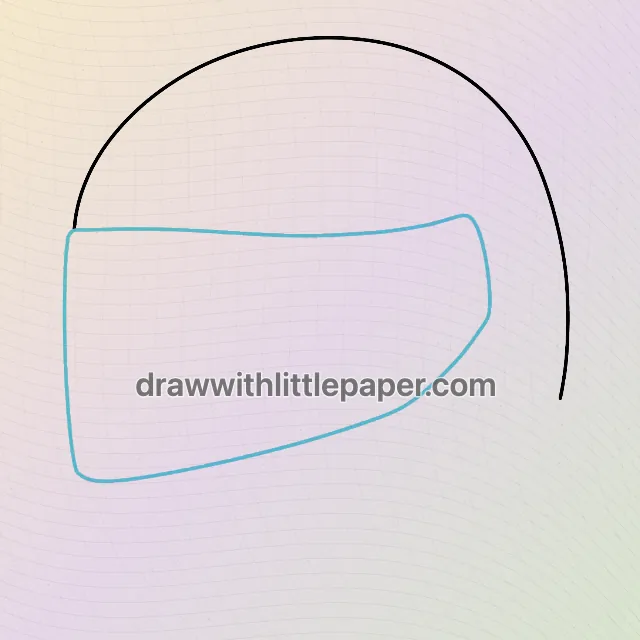
Selected stages · The complete drawing sequence is in the app.
Shapes, character & color
A look at the drawing stages.
Try the shape tips below on paper. When you’re ready to draw along with each small step, continue in LittlePaper.
- 01Selected stage
Selected stage 2: early shapes
This picture shows source stage 2 of 8 for motorcycle helmet, not the next single stroke. Fit the broad visor inside the rounded helmet and wrap the panels around its curved shell. Compare its unfinished edges with the complete outline shown later.
Selected stage 2: early shapes · Preview image 1 of 4 - 02Selected stage
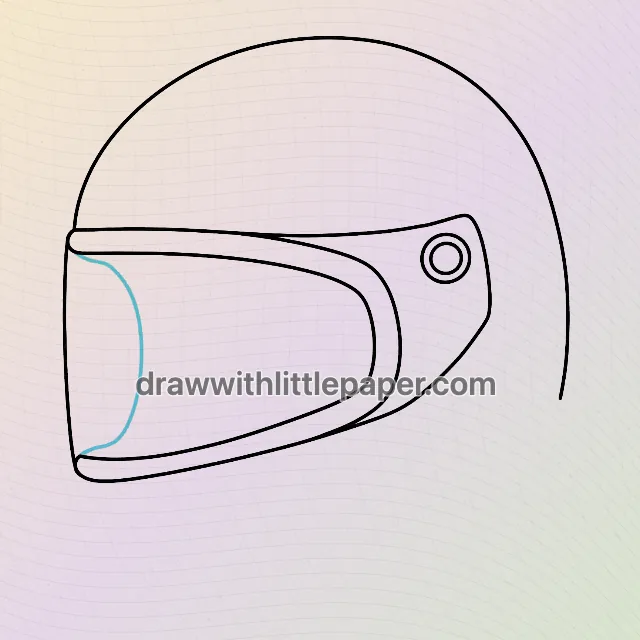
Selected stage 5: building the outline
This picture shows source stage 5 of 8 for motorcycle helmet, not the next single stroke. Compare the curved top and lower visor edges before adding panel lines. Compare its unfinished edges with the complete outline shown later.
Selected stage 5: building the outline · Preview image 2 of 4 - 03Selected stage
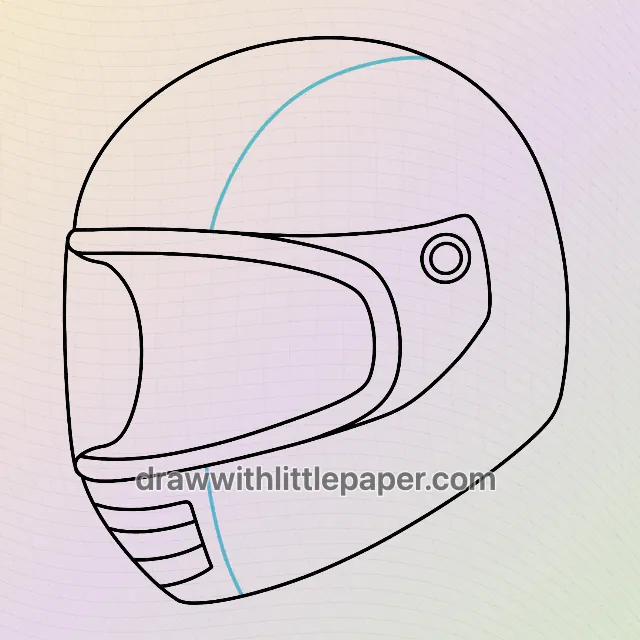
Complete outline: visor opening and curved panels
Compare the finished motorcycle helmet outline with the earlier selected stages. A flat visor strip makes the helmet look cylindrical. Compare the curved top and lower visor edges before adding panel lines.
Complete outline: visor opening and curved panels · Preview image 3 of 4 - 04Selected stage
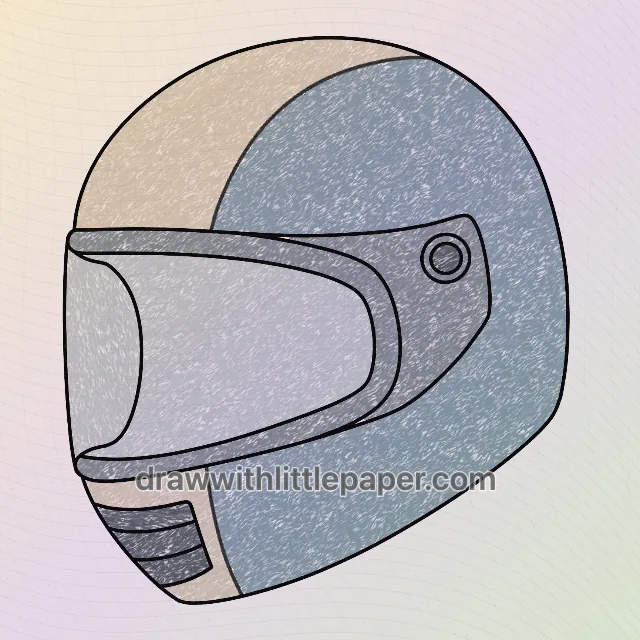
Crayon color: blue-gray, cream white, soft gray
Use the colored motorcycle helmet example to compare the palette after checking the outline. The visible palette includes blue-gray, cream white, soft gray. Keep repeated parts consistent and let small light flecks preserve the crayon texture.
Crayon color: blue-gray, cream white, soft gray · Preview image 4 of 4
A little practice goes a long way
Make room for your own ideas.
The example uses blue-gray, cream white, soft gray. Keep matching limbs and repeated parts in a consistent palette. Use light overlapping crayon strokes so the inner outlines stay visible. Compare the curved top and lower visor edges before adding panel lines.
The next little step is yours
Like the idea?
Let’s make it together.
Open the “Draw Motorcycle Helmet” drawing idea in LittlePaper for the complete sequence. Follow a guide, pause when you need, and add your own colors.
Download LittlePaper from the App Store, then open the drawing idea inside the app.
Every step, at your pace.
See the full drawing sequence. Pause, replay, and take another look whenever a shape needs practice.
A guide where you draw.
Trace on the canvas, then try your own lines with a finger or Apple Pencil on a compatible iPad.
Make it yours. Keep the making.
Add crayon color, replay your creation, and give your picture a home in a digital 3D book.